
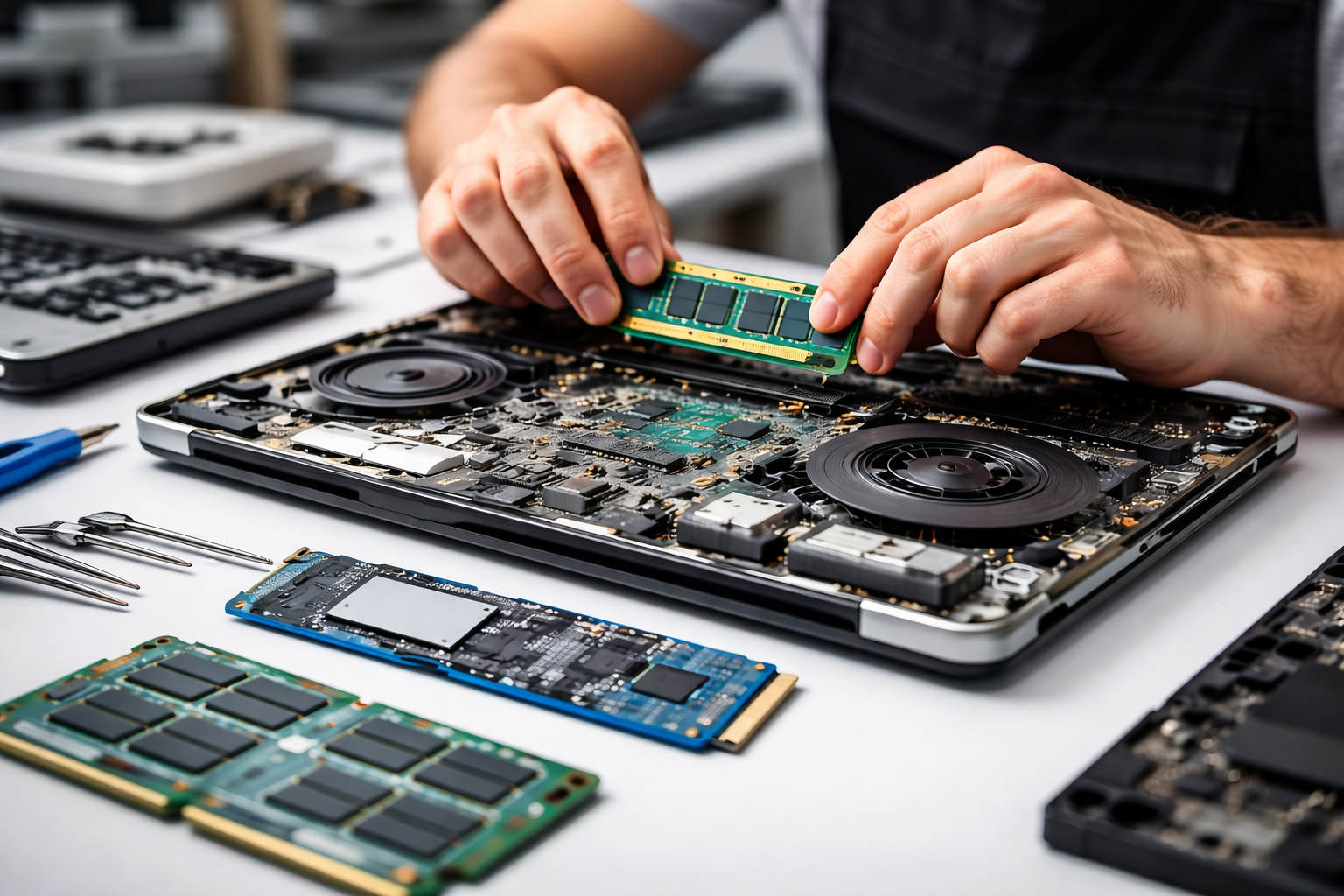
Why component prices are shooting up
Over the past several months the cost of key components — particularly memory (DRAM/RAM) and storage (NAND/SSDs) — has gone up significantly. Here are the main reasons, with some context and what it means for consumers.
1. Massive new demand from AI, data-centres & cloud
One of the biggest drivers is the rapid growth of artificial-intelligence infrastructure, cloud services and massive data centres. These need large amounts of high-bandwidth memory, high-density storage and very fast SSDs. Manufacturers are diverting capacity to serve these high-margin customers.
For example:
- Contract prices for NAND and DRAM have risen by up to ~20% recently, driven by AI-server build-out.
- Older “consumer” components (DDR4 RAM, basic SSDs) are seeing shortages because production resources are being shifted.
2. Supply capacity is constrained
It’s not only rising demand — supply is facing constraints. Some of the factors:
- Manufacturers had cut back production after earlier cycles of oversupply / price collapse. Thus when demand surged, there wasn’t enough ready capacity.
- Transition to newer technologies (e.g., DDR5, HBM memory) means some production lines for “older” tech (DDR4, standard NAND) are being repurposed or reduced.
- Lead-times and capital investments for fabs, clean-rooms, advanced manufacturing are long; you cannot instantly ramp up.
3. Legacy components becoming scarce while newer ones dominate
Interestingly, even modules using older technologies (like DDR4 RAM) are popping in price. The reason: manufacturers are shifting resources to newer tech (DDR5, HBM) so supply of older components shrinks. That means: legacy consumers or devices that still rely on older components face increased competition for dwindling supply.
4. Raw materials, manufacturing cost pressures & supply chain disruptions
While demand & allocation shifts are big, other cost pressures play a role:
- Raw material costs, wafer and substrate manufacturing, controller chips for SSDs etc are experiencing strain.
- Global supply‐chain disruptions (pandemic aftermath, logistics issues, regional shortages) have made manufacturing and transport more expensive and less predictable. The earlier chip‐shortage era is a good reminder.
5. Market dynamics: producers managing supply to protect margins
When prices had collapsed previously, many memory/flash manufacturers reduced output to avoid selling at a loss. That means inventories are lower, giving manufacturers more ability to raise prices when demand rises.
What this means for you (as consumer / PC builder / tech buyer)
- If you’re planning to buy a new PC, upgrade RAM/SSD or build a system, you are likely to see higher-than-expected prices for modules. For example, memory costs and SSD costs in India have already more than doubled in many cases.
- Stock may be slightly tighter for certain spec modules (especially older ones or less common speeds/capacities) because supply is being prioritized elsewhere.
- It may be a good idea to buy sooner rather than later if you see a deal you’re comfortable with, because prices may stay elevated for a while. Analysts suggest this cycle might last into 2026 or beyond.
- On the flip side: if you are building a system but can wait, you might monitor for promotions or alternative module types (perhaps slightly lower speed or capacity) until the market stabilises.
- For upgrade decisions: consider your needs carefully. If your current RAM/SSD is adequate, you may delay incremental upgrades until prices soften.
Why this is not just a short-term blip
Some factors make this situation different from past smaller spikes:
- The scale of demand from AI/data-centre build-out is unusually large and sustained.
- Production reallocation from older to new technologies means older supply lines may remain thin for longer.
- The manufacturing cycle (fabs, equipment, wafer starts) takes years — so supply cannot instantly bounce back.
- Some analysts believe we may be in a multi-year period of elevated prices for memory/storage components.